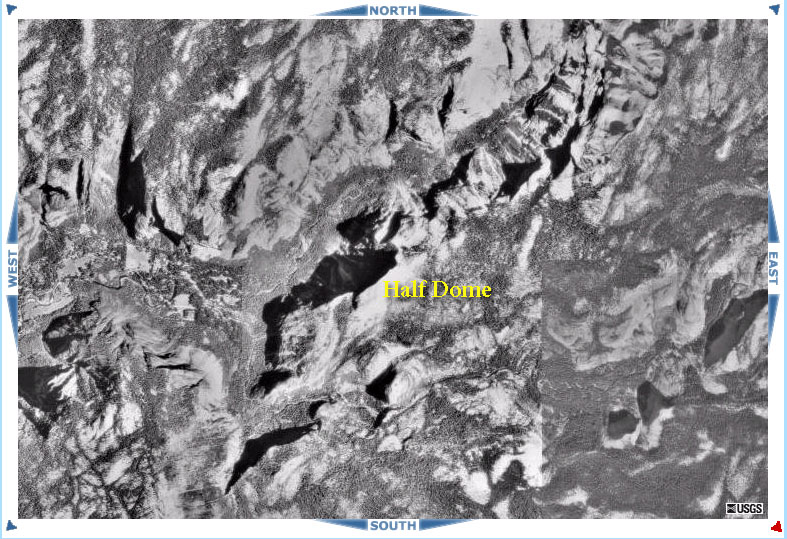
Rising
nearly 5,000 feet above Yosemite Valley and 8,800 feet above
sea level, Half Dome is a Yosemite icon and a great challenge
to many hikers. Despite an 1865 report declaring that it was
"perfectly inaccessible, being probably the only one
of the prominent points about the Yosemite which never has
been, and never will be, trodden by human foot," George
Anderson reached the summit in 1875, in the process laying
the predecessor to today's cable route.
Today,
thousands of people reach the summit. For most, it is an exciting,
arduous hike; for a few, it becomes more of an adventure than
they wanted. Indeed, park rangers assist hundreds of people
on the Half Dome trail every summer. Most of these emergencies
could have been prevented... read on to learn how.
Much
of the hike to Half Dome is an adventure into Wilderness,
and, while there is nothing you can do to guarantee your safety,
below you will find some tips to reduce your risk and have
a safer, more enjoyable hike.
Hiking
The
approximately 15-mile round-trip hike to Half Dome is not
for you if you're out of shape or unprepared. You will be
gaining elevation (for a total of 4,800 feet) most of your
way to the top of Half Dome. Most would say the reward is
worth the effort. Along the way, you'll see outstanding views
of Vernal and Nevada Falls, Liberty Cap, Half Dome, and--from
the shoulder and summit--panoramic views of Yosemite Valley
and the High Sierra.
Please
be warned there is an increase in crowding and congestion
on Saturdays and holiday weekends on Half Dome. Most visitors
arriving at the cables during these periods will experience
slow access to the summit, extended exposure to potentially
uncomfortable conditions, and an increased likelihood of irresponsible
behavior due to frustration with conditions. We strongly recommend
planning your Half Dome visit for days other than Saturdays
or holiday weekends.
Most
hikers take 10 to 12 hours to hike to Half Dome and back;
some take longer. If you plan on hiking during the day, it's
smart to leave around sunrise (or earlier) and then have a
non-negotiable turn-around time. For instance, if you haven't
reached the top of Half Dome by 3:30 pm, you will turn around.
Check for sunrise and sunset times before you hike. Regardless,
each person should carry a flashlight or headlamp with good
batteries (hikers commonly struggle down the trail after dark
because they don't have a flashlight). Although the trail
is well marked, you should be prepared with a good topographic
map and compass and know how to use them.
Another
easy way to make your hike enjoyable is to have well broken-in
boots with good ankle support and good traction. Some of the
most common injuries Half Dome hikers suffer are blisters
and ankle injuries; good footwear is the best way to prevent
these problems.
Half Dome Cables
The
most famous--or infamous--part of the hike is the ascent up
the cables. The two metal cables allow hikers to climb the
last 400 feet to the summit without rock climbing equipment.
Since 1919, only a few people have fallen and even fewer have
died. However, injuries are not uncommon for those acting
irresponsibly.
Tips
while using the cables: